


What Independent Online Retailers Can Learn from Dreame's Global Content Marketing Strategy
Learn how Dreame’s content-led strategy reshaped global e-commerce growth and what independent sellers can learn from its marketing model.
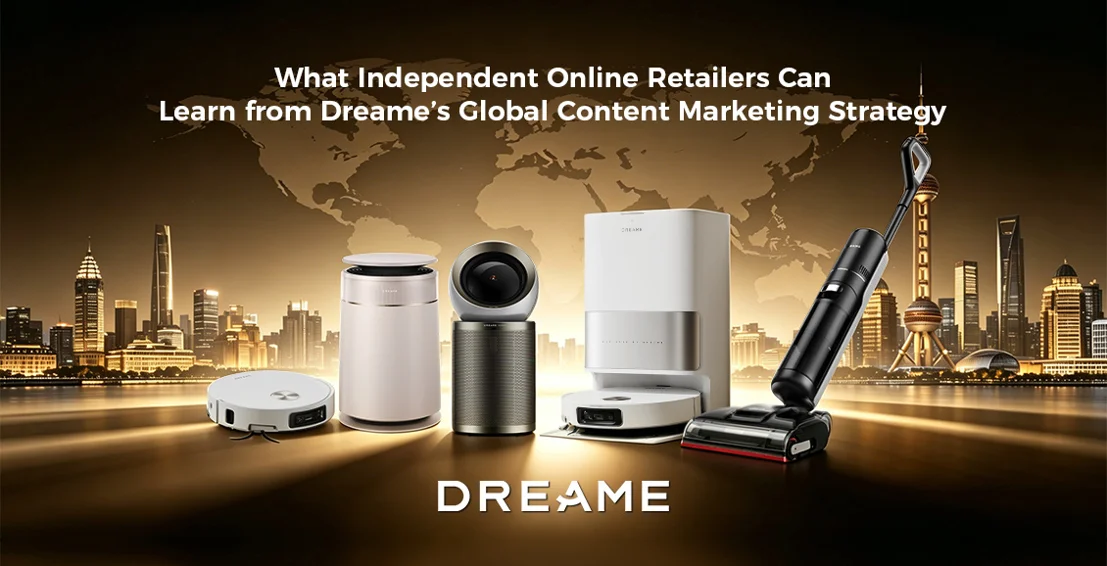
Over the past few years, a wave of Chinese brands has expanded overseas, but very few have managed to break into true brand recognition in Western markets.
In the smart home cleaning category, one name has scaled unusually fast: Dreame Technology.
What makes it stand out isn't just its product lineup - it's the way it has built awareness globally through a highly unconventional playbook.
Put simply:
Dreame didn't scale through traditional advertising. It scaled through content-led distribution.
Using Dreame as a case, this article explores how cross-border brands can build visibility in today's global market.
Why Is Dreame Suddenly Everywhere?
Dreame Technology is a smart home brand focused on intelligent cleaning appliances, including robot vacuums, floor washers, and high-speed hair dryers. Its core positioning is to enhance household cleaning efficiency and improve everyday living through smart technology.
Recently, Dreame has seen rapid growth in visibility across both domestic and international markets, largely driven by its content strategy, and has also strengthened its global brand presence through celebrity partnerships, with actress Liu Yifei reportedly serving as its global ambassador.
According to public reports, founder and CEO Yu Hao has encouraged around 20,000 employees to create short-form videos and build personal accounts. Supported by internal incentives, this has developed into a large employee content network known as the "Dreame creator program."
Instead of relying on traditional advertising or influencer campaigns, the model relies on continuous employee-generated content to increase exposure and build trust over time.
Dreame's Global Strategy: Competing on Experience, Not Price
Dreame's core strategy in overseas markets can be summarised as a shift away from price competition toward user experience and brand building.
Instead of simply selling products, it builds its brand around a broader "smart living"narrative.
1. "Don't Sell a Vacuum, Sell Smart Living"
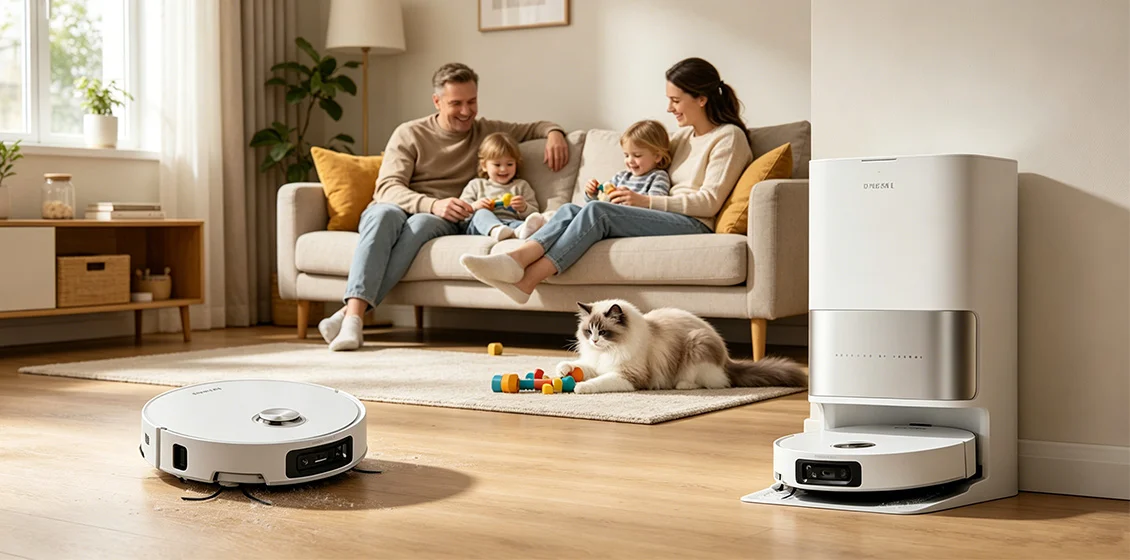
In Western markets, Dreame does not position its robot vacuum simply as a cleaning device. Instead, it frames the product around everyday value:
● a cleaner home
● less time spent on cleaning
● a more effortless daily routine
In this framing, the robot vacuum moves beyond being a household appliance and becomes a tool for saving time in daily life.
Through user-generated content and real-life home scenarios in its lifestyle marketing strategy, Dreame focuses less on technical specifications and more on showing how real families actually use the product and how it improves their daily lives.
2. KOL Reviews + Real Testing Instead of Hard Selling
After users understand the product, Dreame Technology doesn't rely on hard-selling ads to drive sales. Instead, the brand builds trust through authentic third-party content.
Key methods include:
● Working with tech and home KOLs to run honest product review marketing, testing cleaning results, noise, and navigation in real homes, and comparing directly with competitors.
● Using a clear YouTube marketing strategy with in-depth long-form videos that show how the product performs in everyday household situations.
● Relying on creator marketing to consistently share real-life usage content, such as before-and-after cleaning, pet hair cleanup, and tough floor tests.
The goal here is simple: not to tell people the product is good, but to show it in action.
This approach works especially well for high-ticket products, where buying decisions depend on trust, not impulse.
3. Localized Marketing by Country
Once users have seen and understood the product, Dreame Technology takes a further critical step: localization.
But this is not simple translation — it is "reframing the story" for each market within a broader international marketing strategy.
For example:
● In Europe: the messaging focuses on performance comparison and value for money, aligning with a more rational decision-making mindset.
● In the Middle East: the emphasis shifts to family-centered living and everyday convenience, reflecting household-oriented lifestyles.
● Across different countries: local creators and native-language influencers are used to strengthen cultural relevance and trust.
In essence, Dreame does one thing consistently well:
The same product is told differently in different countries, through the lens of local lifestyles.
The result is a clear shift in perception:
Consumers no longer think, "I see a product." They think, "This product is made for the way I live."
Dreame's Content Marketing Formula: Offline + Social Media
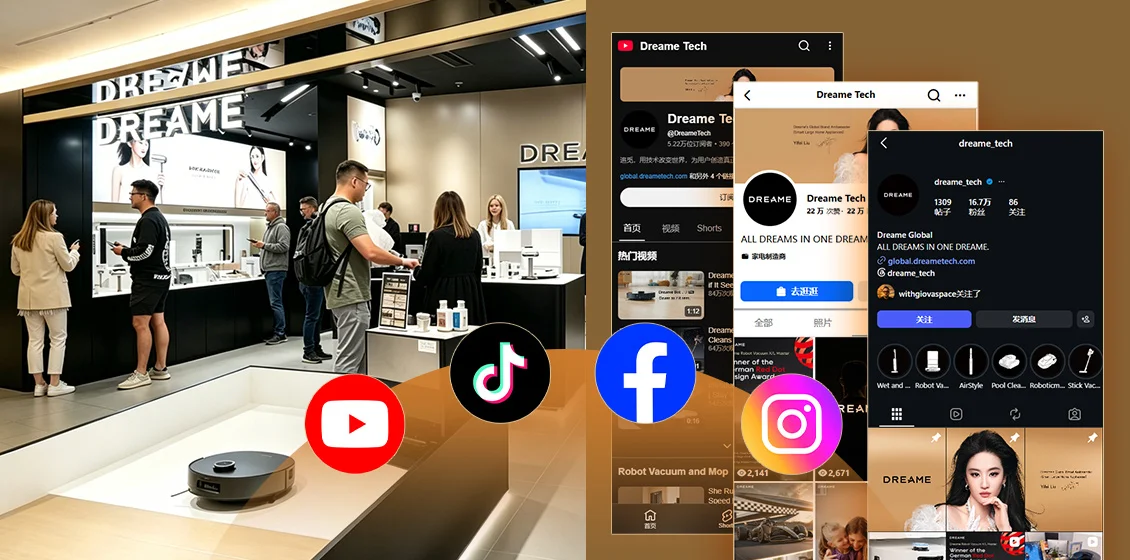
Dreame Technology's content marketing strategy is not just a mix of "offline retail+online ads." It is a content-driven model built around the full customer decision journey.
The core idea is simple: every customer touchpoint can generate content.
Offline: Turning Retail into Content Creation
In offline channels like MediaMarkt, Saturn, and Best Buy, the goal is not only distribution, but content creation.
Physical stores are used as a content engine:
● Inviting influencers into stores to film real product experiences
● Encouraging creators to capture genuine in-store testing and daily interaction
●Turning real user feedback and trial moments into short videos and reviews
In this system, offline retail is no longer the end of the funnel.
It becomes the starting point of content.
Online: Turning Content into Conversion
Online, Dreame Technology does not simply divide channels by function. Instead, its content system follows the customer journey from first exposure to final purchase, reflecting a structured approach to social media marketing for ecommerce.
● YouTube: long-form reviews that build credibility and trust
● TikTok: unboxing and viral content that drives reach and awareness
● Facebook: performance-driven ads and retargeting that support conversion
Many brands fail here because their content is disconnected and lacks a clear structure.
Dreame's strength is that everything works as one system.
Each channel plays a specific role in the decision process, so content is not random, but connected.
From "seeing the product" → "understanding it" → "trusting it" → "buying it", every stage is supported with the right message, in the right format, at the right time.
What Independent Stores Can Learn from Dreame
Dreame Technology's core lesson is not that "more content is better," but that content only works when it is structured.
For independent e-commerce sellers, this can be distilled into three practical principles.
1. Products must be "content-ready"
A common reason content strategies fail is simple: sellers focus on what to film, instead of whether the product is immediately understandable.
The real test is this: can a user understand the product within a few seconds?
A content-ready product should clearly communicate three things:
● What problem it solves
● What the situation looks like before use
● What changes after use
If these are not immediately clear, even large-scale content efforts will struggle to generate impact.
2. Content must be consistent, not occasional
A common mistake is relying on a single viral video or one-off campaign.
Dreame Technology follows a different logic:
People don't usually buy the first time they see a product. They buy after seeing it several times and building trust over time.
In practice, this means:
● Creating different types of content for the same product, such as unboxing, comparisons, usage, and real-life scenarios
● Repeating the same message across different platforms
● Letting different creators show and explain the same product in their own way
3. Trust must come from real experience
Consumers don't trust what brands say. They trust what they see other people actually using.
That is why content should go beyond product features and focus on real-life experience:
● Real home usage scenarios
● Before-and-after comparisons
● Clear problem-solving moments, such as pet hair, carpets, or everyday mess
At its core, the growth logic has shifted. It is no longer about selling products. It is about making products repeatedly seen, understood, and trusted.
Trending Dreame-Related Accessories to Sell in TVCMALL
Dreame Technology's overseas growth is not driven by price competition, but by a stronger product experience that customers are willing to pay for.
Once users are satisfied with that experience, the journey doesn't end. It moves into the next stage: repeat purchases of accessories and consumables.
For example, over time, robot vacuum users regularly need to replace items such as dust bags, filters, mop pads, and side brushes.
These are low-cost items, but they are essential and replaced on a regular basis, which naturally drives repeat demand.
This is why, in the smart cleaning category, the device itself is only the starting point. The real long-term value lies in the accessory ecosystem that follows.
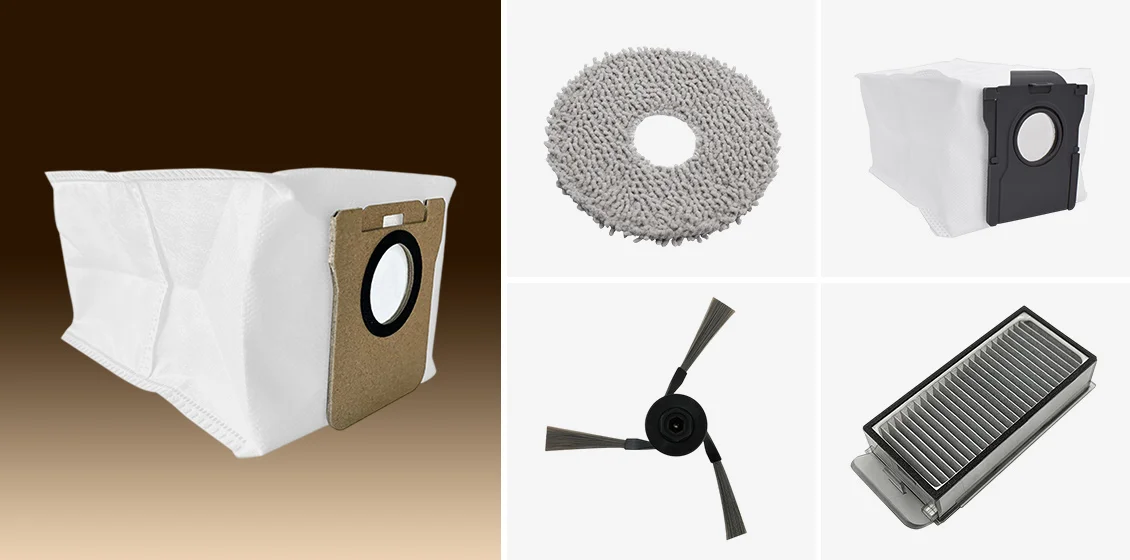
In this area, TVCMALL, as a leading B2B wholesale platform, also offers a wide range of high-demand dreame replacement parts, including:
TVCMALL Empowering Independent Online Sellers
Dreame Technology's case highlights a clear shift in cross-border e-commerce from paid traffic to content-driven growth.
In this shift, independent online stores are no longer competing for traffic alone. They are competing on consistent content production, clear product communication, and trust across different markets.
This is also the direction TVCMALL has been focusing on. We not only provide stable supply chain support, but also continuously share real market cases and practical growth insights from global markets.
But in practice, many sellers face a more immediate challenge: even when content is produced, traffic does not automatically increase. In another article, we explore a more fundamental question: how to increase website traffic for online stores on a low budget. This serves as a practical extension to this topic.
We will continue sharing practical insights to help sellers move from simply selling products to building sustainable, content-driven growth.
Together We Thrive!
Leave a Comment
Your email address will not be published. Required fields are marked *

Stay Current with TVCMALL Wholesale
Subscribe for free to our blog and get expert advice, industry insights, and top wholesale picks. Boost your sales with TVCMALL today!